
Electronics & Electrical
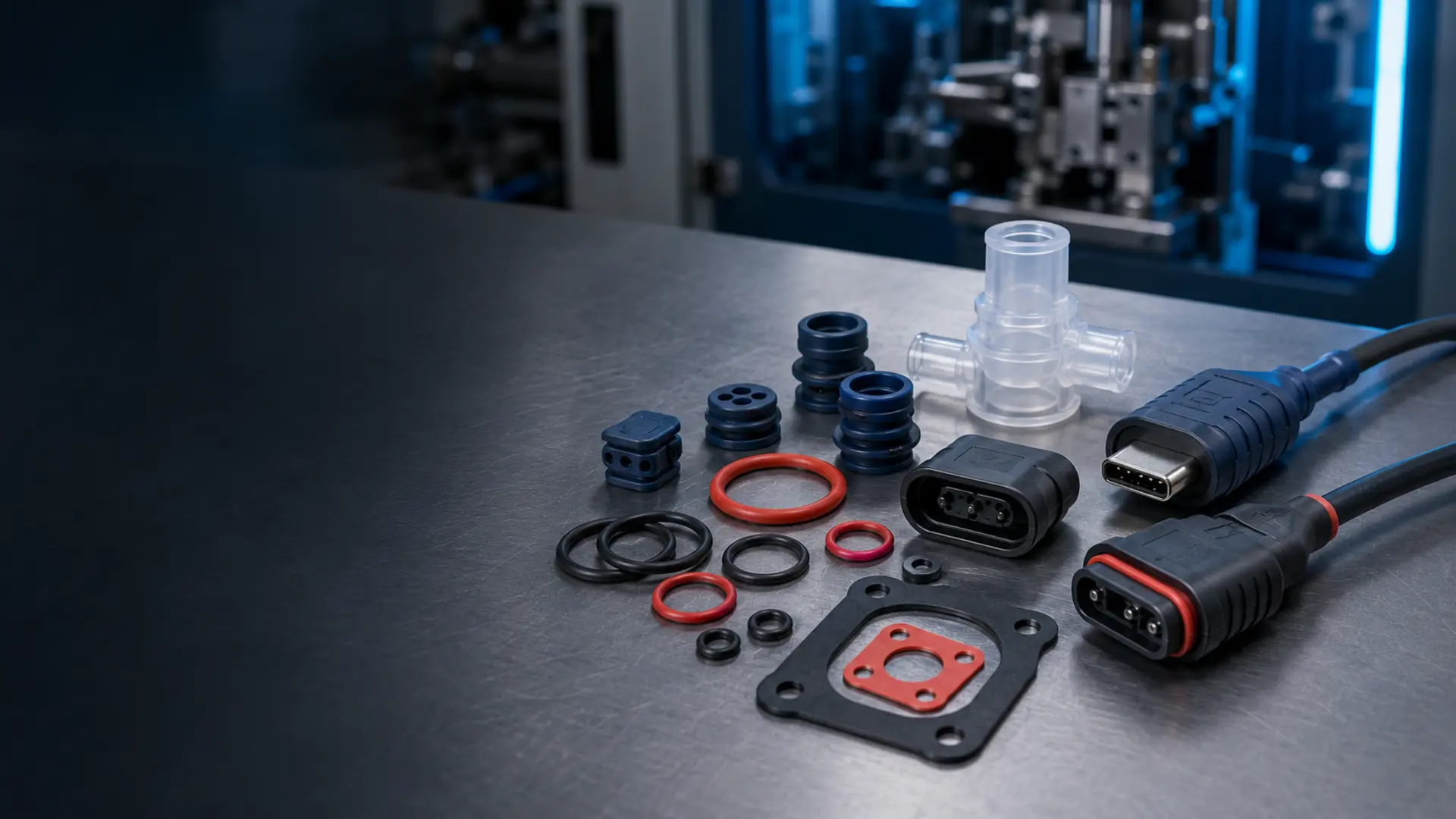
Silicone keypads, connector seals, cable entries, strain reliefs, insulation pieces, device boots and sensor encapsulation components.
A useful material choice depends on real service conditions: temperature, fluids, compression, movement, electrical needs, cleaning, aging and the mating components.
Silicone keypads, connector seals, cable entries, strain reliefs, insulation pieces, device boots and sensor encapsulation components.
LSR valves, diaphragms, connector parts, fluid-path seals, soft interfaces and overmolded subassemblies made to customer drawings.
Static and dynamic sealing geometries for housings, flanges, cable passages, equipment covers and controlled fluid or air paths.
Waterproof connector housings, metal-insert sealing pins, bellows, protective boots and vibration-damping elastomer components.
Dust covers, flexible ducts, buffers, stops, supports, protective mats and irregular parts for machinery and instruments.
Protective sleeves, light seals, impact covers, grips and molded encapsulation around sensor or optical subassemblies.
Tell us what the part must do, what it contacts and how it fails. That context is often more valuable than selecting a silicone grade before the design is reviewed.
Control water, dust, air or fluid at a housing, connector, flange, shaft or interface.
Cushion a device, shield a cable or cover a sensitive assembly against handling and the environment.
Separate electrical or thermal interfaces where a silicone formulation and geometry are appropriate.
Flex repeatedly in a bellows, diaphragm, valve, boot or strain-relief structure.
Integrate soft silicone with a rigid plastic, metal, cable or subassembly through overmolding.
Absorb impact, noise or vibration through a controlled elastomer shape and hardness.
Send the material, dimensions, application environment and estimated quantity. Our team will review the project and identify the next engineering step.