
Solid Silicone Compression Molding
Suitable for many gaskets, seals, pads, covers, boots and larger elastomer parts. Tool layout, charge placement, venting, curing and deflashing are planned around geometry and surface requirements.
We evaluate geometry, material behavior, insert structure, volume and quality requirements before recommending compression molding, LSR injection molding or an overmolding route.
Suitable for many gaskets, seals, pads, covers, boots and larger elastomer parts. Tool layout, charge placement, venting, curing and deflashing are planned around geometry and surface requirements.
Used for precision LSR components, thin or detailed features and higher-repeatability programs. Mold design must control filling, venting, flash, demolding and cold-runner behavior.
For plastic, metal, cable and electronic inserts that require sealing, cushioning, grip, insulation or environmental protection. Adhesion strategy and insert control are key inputs.
Components can be molded around stainless steel, metal, PC, PA and other project-approved substrates when the structure and material pair are suitable for the process.
Tool construction, first trials and sample review are tied to a defined drawing revision. Findings from fill, flash, dimensional and assembly checks guide the next iteration.
Project-dependent operations may include deflashing, post-curing, printing, surface treatment, part assembly, functional checking and customized packaging.
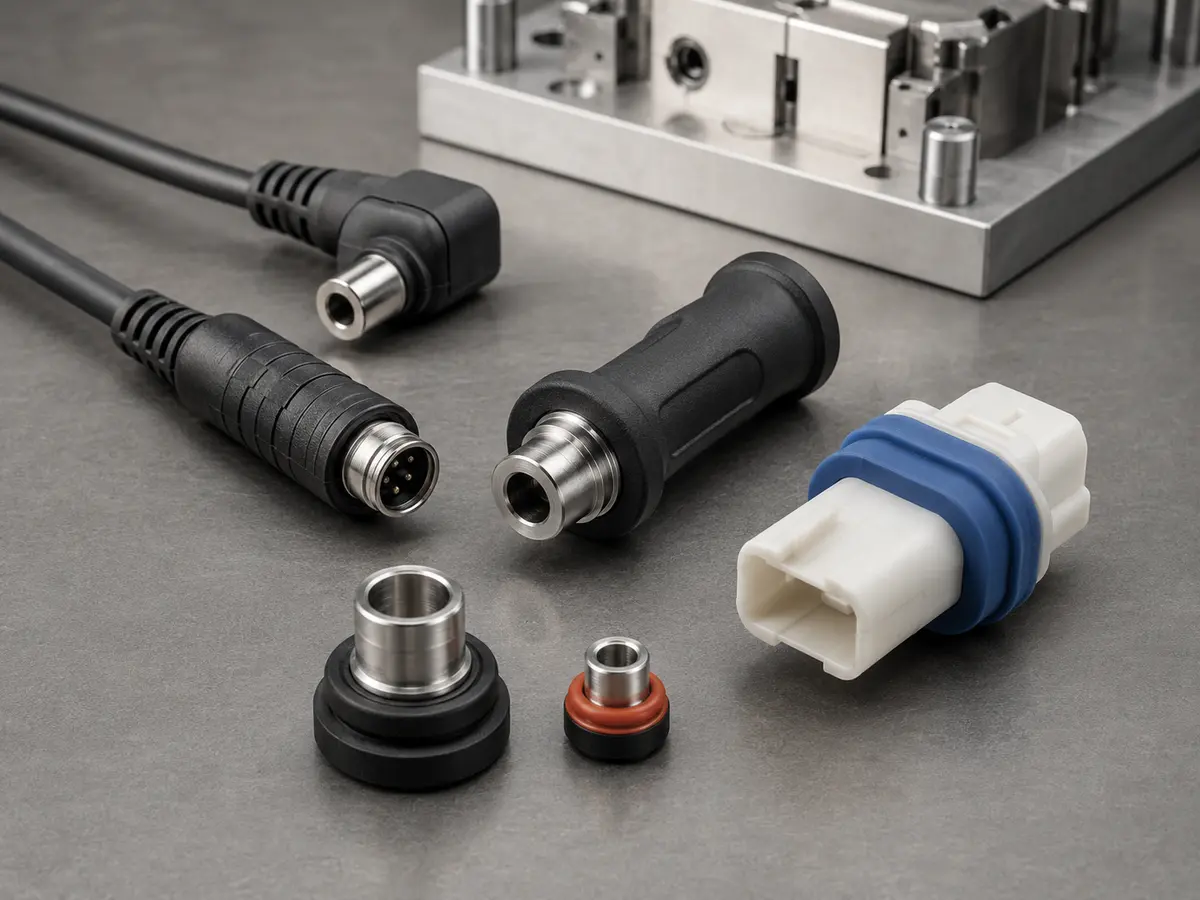
Overmolding success depends on the substrate, silicone formulation, surface condition, primer or self-bonding strategy, insert temperature, shutoff design and the loads seen in use.
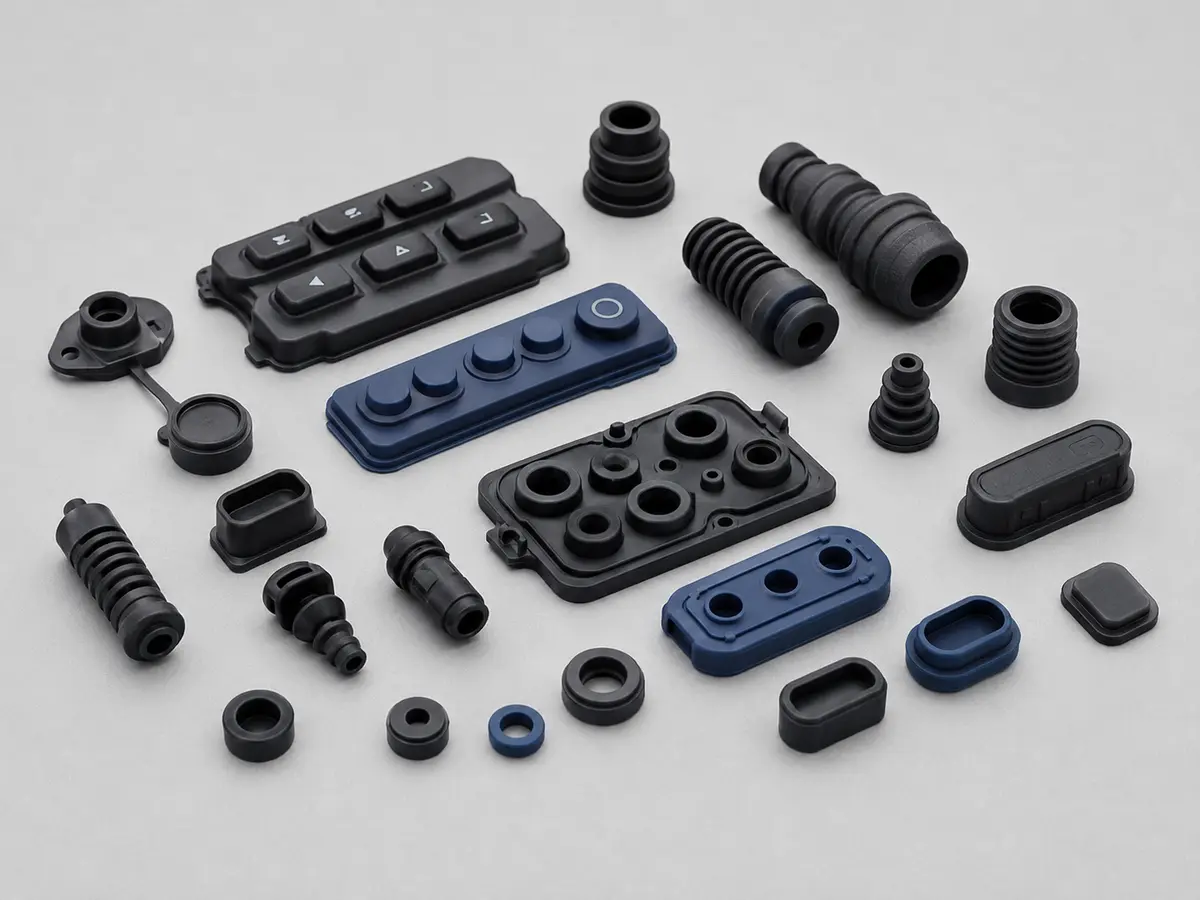
Flexible materials still need deliberate design. Early review helps avoid weak sections, unstable dimensions, trapped air, tearing during demolding and uncontrolled flash.
Two parts that look similar can need different tooling when material, volume, flash, insert or validation requirements change.
Size, wall, undercut, membrane, texture and demolding risk.
Solid silicone or LSR, hardness, color and functional resistance.
Plastic, metal, cable or electronics and the required bond interface.
Prototype quantity, first order, annual usage and life-cycle expectation.
Critical tolerances, appearance, tests, reporting and traceability.
Send the material, dimensions, application environment and estimated quantity. Our team will review the project and identify the next engineering step.